
Ethiopia Car Rental
Corporate Cluster · 2025

NGO Field-Mission Vehicle Planning: Land Cruiser vs HiLux vs HiAce

The most common mistake in NGO field vehicle planning is choosing by habit rather than matching vehicle to mission profile. Here is how to choose correctly.

NGO field-mission vehicle planning in Ethiopia matches vehicle to mission profile. The Toyota Land Cruiser 70/76/79 is the default for remote highland and lowland access; the HiLux pickup suits cargo and equipment with a small team; the HiAce minibus handles staff movements on paved routes. Using the wrong vehicle wastes budget and compromises safety.

Contents
  1. 01Toyota Land Cruiser (70 / 76 / 78 / 79 Series)
  2. 02Toyota HiLux (Pickup)
  3. 03Toyota HiAce Minibus (9–12 Seats)
  4. 04Vehicle Decision Matrix
  5. 05Asset Ownership vs Long-Term Hire
  6. 06Field Readiness Checklist
  7. 07Fuel Management on Field Missions
  8. 08Driver Management on Field Deployments

01

Toyota Land Cruiser (70 / 76 / 78 / 79 Series)

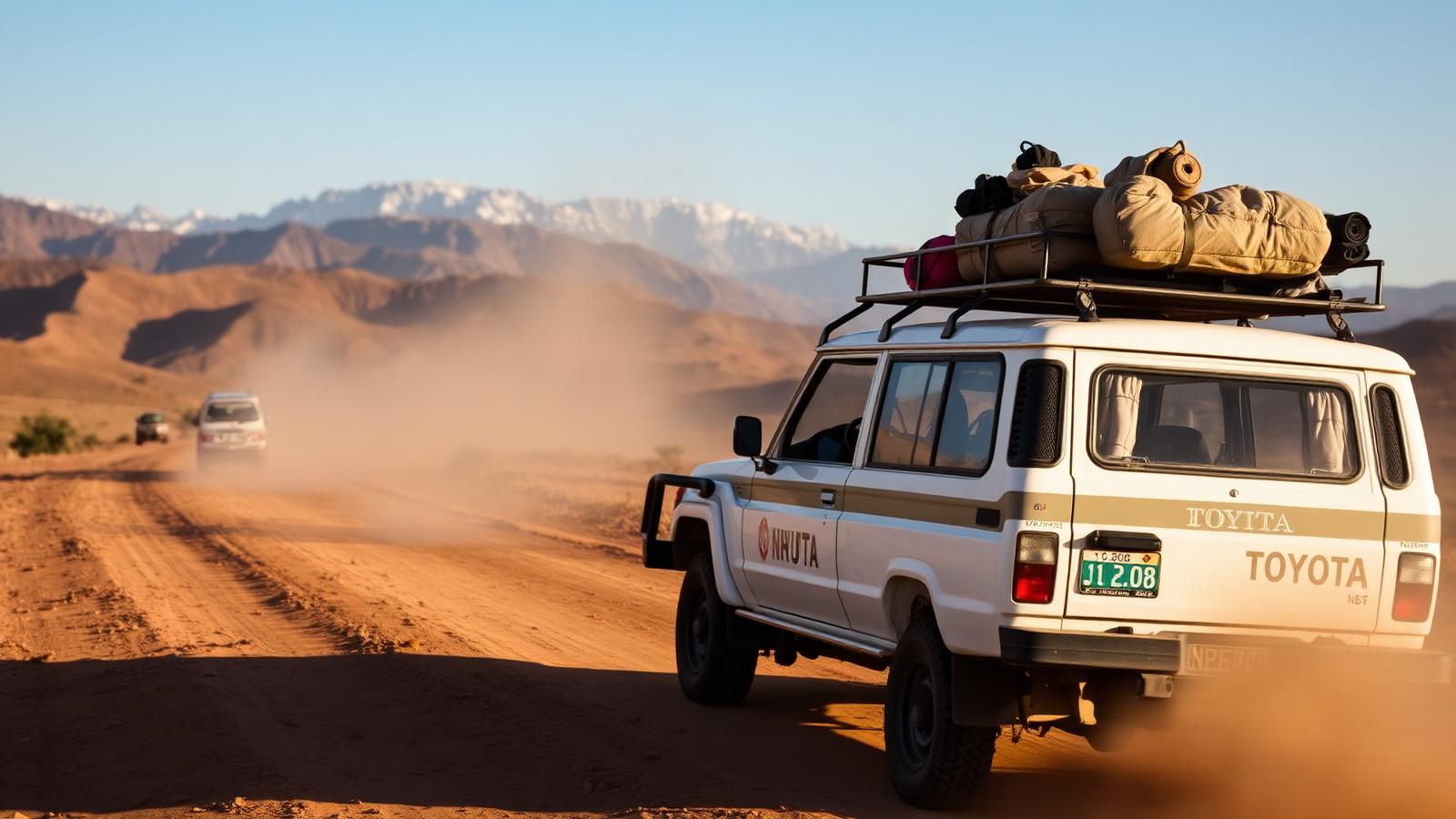
The default field vehicle for serious remote access in Ethiopia. Extraordinarily robust, well supported by mechanics across the country, and genuinely capable on the terrain where most field missions operate.

  • Variants: 70 hardtop, 76 station wagon, 78 Troopy, 79 pickup cab-chassis
  • Seating: 5–9 depending on series
  • Engine: 4.2L diesel or 4.5L V8 diesel
  • Ground clearance: 210–230 mm — genuine off-road capability
  • Payload: 700–1,200 kg depending on series
  • Fuel: 12–15 L/100 km paved; 16–22 L/100 km off-road

Best for: nutrition / health surveys in SNNPR, Somali or Afar; agricultural extension fieldwork in highlands; emergency response logistics; security contexts requiring off-road evasion options; any unpaved route in rainy season.

02

Toyota HiLux (Pickup)

The field vehicle for operations that need payload capacity alongside moderate off-road performance. The HiLux prioritises cargo — tools, equipment, medical supplies, food distribution materials.

  • Variants: double cab (4 seats + bed), single cab (2 seats + max bed)
  • Ground clearance: 180–210 mm
  • Payload: 800–1,000 kg in bed
  • Towing: 2,500–3,000 kg
  • Fuel: 10–14 L/100 km paved; 14–18 L/100 km off-road

Best for: WASH programme construction monitoring; food security distribution support; agricultural input distribution with heavy loads; small survey team plus equipment; towing trailers or mobile units.

03

Toyota HiAce Minibus (9–12 Seats)

Not a field vehicle in the off-road sense. It is a staff mobility vehicle — the right choice for moving teams efficiently on paved and good-quality gravel roads. Many NGOs combine Land Cruisers for remote field access with HiAce vehicles for Addis Ababa staff movements and regional hub-to-hub travel.

  • Seating: 9–12 passengers + driver
  • Ground clearance: low — not for rough terrain
  • Fuel: 10–12 L/100 km highway
  • Air conditioning: yes — important for long highway journeys

Best for: staff shuttle in Addis Ababa; training workshop participant transport on paved routes; airport group transfers; inter-city movement on paved highways (Addis–Hawassa, Addis–Bahir Dar).

04

Vehicle Decision Matrix

  • Remote / off-road terrain: Land Cruiser best · HiLux good · HiAce avoid
  • Highland mountain route: Land Cruiser best · HiLux good · HiAce avoid
  • Rainy season unpaved road: Land Cruiser best · HiLux good · HiAce avoid
  • Large cargo / equipment: HiLux best · Land Cruiser moderate · HiAce avoid
  • Staff group movement (6+ pax): HiAce best · Land Cruiser possible · HiLux avoid
  • Highway paved route: all three workable; HiAce most efficient per pax
  • City / urban-only use: HiAce or HiLux preferred over Land Cruiser (fuel cost)

05

Asset Ownership vs Long-Term Hire

  • Capital outlay: own = USD 70–120k per Land Cruiser; hire = operational cost only
  • Maintenance: own = your responsibility; hire = handled by operator
  • Disposal on exit: own = significant effort and losses; hire = simple return
  • Donor compliance: some donors disallow capital assets — hire is cleaner
  • Fleet flexibility: own = fixed; hire = scale up or down by mission
  • Best for: own = missions over 5 years with stable funding; hire = under 5 years or variable demand

06

Field Readiness Checklist

Standard equipment (every field vehicle): full-size spare (two on Land Cruisers), jack and wheel brace, tow rope, basic tool kit, ISO first aid kit, fire extinguisher, vehicle documents.

Remote-mission additional kit: high-lift jack, shovel, fuel jerry cans (minimum 2 × 20 L), 10 L water per person per day, satellite communication device or HF radio (UNDSS minimum for high-risk areas), emergency blankets and rations.

07

Fuel Management on Field Missions

  • Main highway: depart full; refuel at each regional capital; maintain 25% reserve
  • Secondary paved route: depart full; carry 20 L spare; pre-identify next station
  • Gravel / mixed route: depart full; carry 40 L spare; pre-plan fuel points
  • Remote off-road: depart full; carry 80 L+ spare; satellite comms essential

08

Driver Management on Field Deployments

  • No more than 8–10 hours driving per day — fatigue is a primary cause of accidents in Ethiopia
  • Adequate accommodation, meals and rest at every overnight stop
  • Daily vehicle check before departure — recorded in writing in the vehicle log
  • Communication protocol: driver reports at departure, waypoints and arrival
  • Incident reporting: any accident, near miss, breakdown or security event reported within 2 hours
Discuss a Long-Term Hire
Continue Reading

Related services & resources