
Ethiopia Car Rental
Cluster Guide · 2025

Driving Conditions and Road Safety in Ethiopia

What to expect on the road, which routes are saloon-friendly, where a 4×4 is essential, and how to stay safe across the country.

Driving in Ethiopia ranges from excellent expressways out of Addis Ababa to demanding mountain tracks where 4x4 vehicles are essential. Key hazards include livestock, pedestrians, unmarked speed bumps, potholes, rainy season damage from June to September and altitude. Night driving outside major cities is strongly discouraged.

Contents
  1. 01The State of Ethiopia's Roads in 2025
  2. 02Seasonal Road Conditions
  3. 03Driving Hazards: What to Expect
  4. 04Night Driving in Ethiopia
  5. 05Road Rules and Police
  6. 06Altitude and Health
  7. 07Breakdown and Emergency

01

The State of Ethiopia's Roads in 2025

Excellent

  • Addis Ababa ring road and inner-city highways
  • Addis Ababa to Adama (Nazret) expressway — 4-lane, excellent
  • Addis Ababa to Hawassa highway — paved, generally good
  • Main routes north to Gondar and Bahir Dar — largely paved

Moderate

  • Bahir Dar to Lalibela — partially paved, sections of gravel
  • Addis Ababa to Harar via Dire Dawa — variable surface quality
  • Most secondary inter-city routes — paved in parts, gravel in others

Challenging

  • Lalibela surroundings — steep mountain tracks, seasonal damage
  • Simien Mountains National Park interior — rough 4×4 tracks
  • Bale Mountains — high-altitude gravel and earthen roads
  • Danakil Depression access — extreme terrain, specialist route
  • Most rural district roads — unmaintained, flood damage

02

Seasonal Road Conditions

  • Dry (Oct–May): Best conditions on most routes. Dust can reduce visibility.
  • Short rains (Mar–Apr): Minor impact on main roads. Some rural routes become muddy.
  • Long rains (Jun–Sep): Significant degradation of unpaved roads. Highland routes may be impassable. Flash flooding on low-lying roads.

03

Driving Hazards: What to Expect

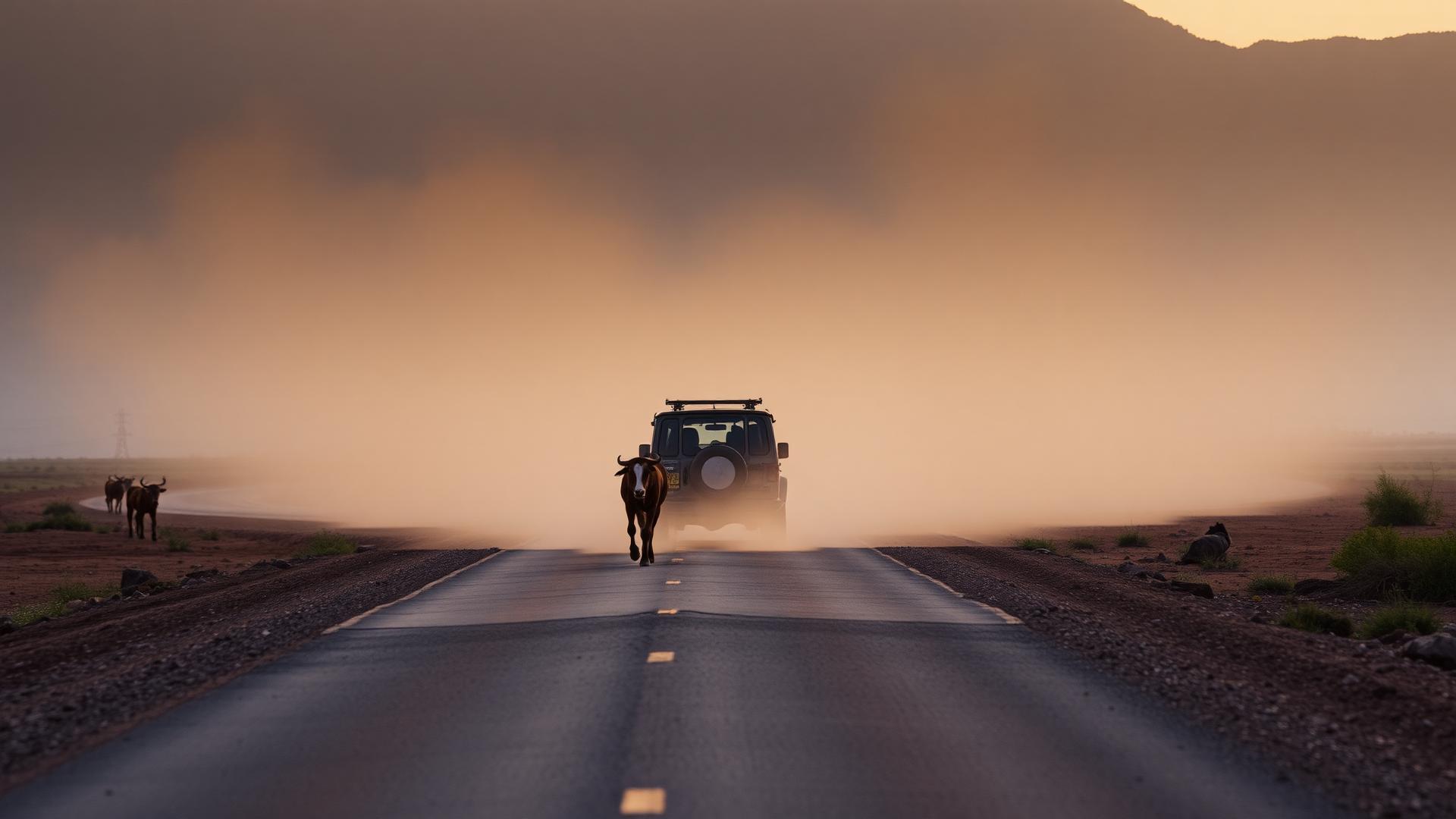
Livestock. Cattle, goats, camels and donkeys routinely cross and walk along Ethiopian roads, including main highways. Constant vigilance required, particularly outside urban areas at dawn and dusk.

Pedestrians. High pedestrian-to-vehicle ratio. Reduce speed in villages and market areas.

Minibuses and bajaj. Stop frequently and unpredictably. Allow plenty of following distance in urban areas.

Speed bumps. Often unmarked, located at town entrances, school zones and police posts. Hitting one at speed can cause serious vehicle damage and injury.

Potholes. Even good roads can have isolated deep potholes. Night driving is particularly hazardous.

Fuel. Plentiful in cities and on main highways; scarce on secondary routes. Always depart on a full tank with reserve.

04

Night Driving in Ethiopia

Night driving outside Addis Ababa and major cities is strongly discouraged: unlit roads, invisible pedestrians and livestock, unmarked speed bumps, reduced checkpoint visibility, and higher breakdown risk in remote areas. Our drivers will not drive through the night on remote routes as standard practice.

05

Road Rules and Police

Ethiopia drives on the right. Speed limits: urban areas 50 km/h, open roads 80–100 km/h, expressways 120 km/h.

Police checkpoints are present throughout Ethiopia. You will be required to stop and present vehicle documents and, if self-driving, your licence and IDP. These checks are routine and straightforward with correct documentation.

Documents Foreigners Need to Hire a Car in Ethiopia

06

Altitude and Health

Addis Ababa sits at 2,355 metres above sea level. The Simien Mountains reach above 4,500 metres. Altitude-related fatigue — and in extreme cases altitude sickness — is a genuine risk.

  • Allow 24–48 hours to acclimatise on arrival before long journeys
  • Ascend gradually to high-altitude destinations where possible
  • Carry paracetamol and stay well hydrated
  • Inform your driver immediately if you feel unwell on a mountain route

07

Breakdown and Emergency

Our vehicles carry a spare tyre, jack, first aid kit and tool set. In the event of a breakdown your driver manages the vehicle and contacts our operations team; a replacement is dispatched from the nearest depot. Response in remote areas may be several hours. For serious accidents, Ethiopia’s emergency number is 911.

Plan a Safe Journey
Continue Reading

Related services & resources